 Cancel Order
 Logo Slider
 Cart Reservation
 Magic Menu
 PageSpeed
 DeleteX
 ChargeMe
 Age Restriction 18+
 DocumenThemix
 Agile Search
 Newsletter Popup
 IConvert Promotion
 Trusty Sale Proof
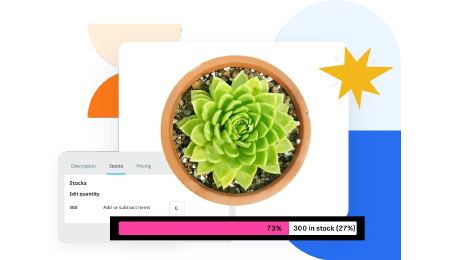 Countdown x Bar
 Xleft
Xleft Jump to Checkout
 PrestaSEO AI++
 Accessibility Guard
 SOO Agent Gateway
 SOO Agent Catalog Tools
 SOO Agent SEO Tools
 GDPR
GDPR Create a new account
PrestaShop Mega Menu: How to Build One + Best Module (2026)

One day i wake up and want to build a store based on Prestashop for my project. And i started looking for a Mega menu Prestashop module. I found some modules but they are not good enough: so ugly, bad design, no responsive, no updated for a long time.
So i thought - I need to develop a new module for my self.
PrestaShop Mega Menu: Complete Setup Guide for 2026
A PrestaShop mega menu turns a plain navigation bar into a large multi-column panel: categories, subcategories, images, icons and links visible at a glance. Done right, it improves navigation, raises internal linking and makes large catalogs browsable. Done wrong, it breaks on mobile and slows your store. This guide covers when you need one, how to build it safely on PrestaShop 1.7/8/9, the five most common mistakes, and when a paid module is worth it.
What is a mega menu and when does a store really need it
A mega menu is a dropdown panel that shows more than one column: usually the full category tree plus featured products, brands or CMS links. Small stores (under 50 products) rarely need one — a classic dropdown is enough. You need a mega menu when:
- You have more than 5 top-level categories, each with subcategories.
- Products are hard to find in 3+ clicks from the homepage.
- You want to feature promotions or collections directly in the navigation.
- You run a B2B or catalog-style shop where browsing beats searching.
How a mega menu affects UX, navigation and internal linking
Navigation is a ranking signal in practice: pages that are reachable in fewer clicks get crawled more often and pass more link equity. A mega menu puts every category and key product one click from any page. It also reduces bounce — visitors find what they need instead of leaving. On mobile the same structure must collapse into a hamburger or accordion, which is where most free implementations fail.
How to create a mega menu in PrestaShop
Before you build anything, take five minutes to plan the structure on paper (or a spreadsheet): top-level categories, which subcategories appear under each, and which items carry images or icons. A mega menu that simply mirrors the full category tree is just a bigger dropdown — the value comes from curating what the visitor sees first.
PrestaShop 8 and 9 ship with ps_mainmenu, a single-level menu with basic dropdowns. It cannot render multi-column panels with images out of the box, which is exactly why the mega menu category exists in the PrestaShop Addons marketplace and in developer stores.
Option 1 — The safe way: use a mega menu module
Before installing, verify the module states compatibility with your exact PrestaShop version. PrestaShop 9 in particular changed several internal APIs, and not every module that worked on 1.7 or 8 runs on 9 without a patch. A module that lists "PS 9" on its product page is safer than one that only says "1.7/8".
Modules are the recommended path on PrestaShop 1.7/8/9 because the native menu (ps_mainmenu) does not support multi-column panels out of the box. The setup pattern is the same for most modules:
- Install and enable the module, then go to its configuration page.
- Create menu items: top-level categories, subcategories, custom links.
- Enable images/icons per item if supported.
- Hookup the module to the header position (
displayTopor the theme's header hook). - Clear PrestaShop cache and test on desktop and mobile.
If you use SOO Magic Menu, the configuration is visual: drag categories, choose layout, set icons — no code required.
Option 2 — Advanced: custom CSS/HTML
If you choose this path, keep the markup simple: a nested <ul> with CSS absolute positioning, :hover for desktop and a tap-based toggle for mobile. Budget for testing: keyboard-only users, screen readers, tablet touch, and every theme update. Most stores that start custom end up migrating to a module after the first theme upgrade breaks the menu.
You can build a mega menu with CSS and a custom template override. This gives full control but has real costs: it must work across breakpoints, keyboard navigation, mobile touch, and every theme update can break it. Only choose this if you have a developer and a very specific design. For most stores, a module is faster and more reliable.
Mega menu setup checklist
Run this checklist before and after deploying the menu. The goal is not just "menu works" but "menu works for every visitor on every device":
- ☐ Menu works on desktop hover and click
- ☐ Menu collapses correctly on mobile (hamburger/accordion)
- ☐ Subcategories limited to a sensible depth (2–3 levels max)
- ☐ Images and icons optimized (WebP, lazy load)
- ☐ Every top-level category reachable in ≤2 clicks
- ☐ Menu does not push the layout (no CLS jump)
- ☐ Cache cleared and tested after every change
5 common mega menu mistakes (and how to fix them)
These five issues account for almost every support ticket about PrestaShop mega menus. Fix them in this order — most stores only have the first two:
- The menu does not show at all. The module is not hooked to the header hook, or the theme uses a custom hook name. Re-hook the module, clear cache, check the theme's hook list.
- The menu breaks on mobile. The CSS only targets desktop widths. Use a module with a mobile layout or add a mobile breakpoint stylesheet.
- Hover menus don't work on tablets. Touch devices have no hover. Make top-level items tappable and open submenus on tap.
- The menu slows the page. Too many high-resolution images in the menu. Compress images and lazy-load menu panels.
- Category depth is too deep. Five nested levels confuse visitors and dilute link equity. Flatten to 2–3 levels.
Already using SOO Magic Menu and hit a PrestaShop 9 compatibility issue? Grab the free Magic Menu compatibility patch from the blog.
Free vs paid mega menu modules
The table below is a generalization — some free modules are surprisingly capable, and some paid modules are thin wrappers. Read the feature list, not the price tag:
| Feature | Free module | Paid module (e.g. SOO Magic Menu) |
|---|---|---|
| Multi-column layout | Basic | Full control |
| Mobile-optimized | Often missing | Included |
| Images & icons | Rarely | Yes |
| Category depth control | No | Yes |
| Support & updates | No | Yes |
SOO Magic Menu: who it is for
Three store profiles get the most out of it:
- Catalog stores with 5–20 categories that need images and icons in navigation to guide visitors.
- Stores that previously hacked CSS menus and want something maintainable across theme updates.
- Agencies building client stores that need a repeatable, configurable navigation component.
SOO Magic Menu (€49 one-time) is for PrestaShop stores that treat navigation as a growth lever: multi-column layouts, image and icon support, and a visual configuration screen. Check the product page for the exact tested versions — compatibility is verified per PrestaShop release rather than assumed. You can try the free patch or ask support before buying if you run an unusual version.
FAQ
How do I create a mega menu in PrestaShop?
The safe way is a mega menu module: install it, create menu items, assign categories and hook it to the header. For custom stores, CSS/HTML is possible but harder to maintain and breaks on mobile.
Is a mega menu good for SEO?
Yes — a mega menu improves internal linking: every category and important product gets a visible link from every page, distributing ranking authority and reducing click depth.
Why is my PrestaShop mega menu not showing?
Usually the module is not hooked to displayTop, the cache was not cleared, or the theme overrides the hook. Re-hook, clear cache, check the theme hooks.
Do mega menu modules work with PrestaShop 8 and 9?
Most support 1.7 and 8; PrestaShop 9 compatibility must be verified per module. SOO Magic Menu states its tested versions on the product page.
Free or paid mega menu module?
Free modules handle basic multi-column menus. Paid modules add mobile layouts, images/icons, depth control and support. Choose paid when navigation is core to your store.
Measuring whether your mega menu works
After launch, watch three metrics in Google Analytics:
- Navigation clicks: if category clicks from the menu go up, the structure is working.
- Bounce rate on category pages: a well-curated menu should reduce bounces.
- Pages per session: mega menus typically raise it because visitors browse more categories.
Give the new menu two to three weeks before judging it. Navigation habits change slowly, and a menu that feels unfamiliar for the first days often performs best after visitors adapt.
Mega menu and PrestaShop 9: what changed
PrestaShop 9 introduced a modernized back office and updated front-end dependencies. For menu modules, the practical impact is that older modules written for 1.6-era hooks or jQuery patterns may stop working. When you upgrade to 9:
- Check the module's compatibility page before upgrading the store.
- Back up the menu configuration (module settings + hook assignments).
- Test the menu on a staging copy first, not on the live store.
If your current module breaks after upgrading, the compatibility patch route is often faster than rebuilding the menu from scratch.
Bottom line
If your catalog has more than five categories, a mega menu is one of the highest-ROI navigation improvements you can make: better UX, stronger internal linking, fewer bounces. Start with a module, keep the structure shallow, and test on mobile before launch. For related PrestaShop improvements, see our Best PrestaShop Addons 2026 and the PrestaShop SEO Guide 2026.

 PrestaSOO